The argument for why police should use body cameras is that the police should have nothing to hide in
their conduct and it could only further help clear up the issues of police misconduct while promoting trust
in the judicial system. Some people think that police would be more reserved and more hesitant to make
arrests with body cameras because they might be afraid that they could be caught for misconduct,
but this is actually the opposite. “In fact, this study showed that those officers made more arrests and
issued more citations than the control group without cameras.”
People saw these results and said that there must have been biased in testing because they expected that
police with body cameras would make less arrests and issue less citations. This, once again, contradicts
popular belief in this regard in the sense that the study had no statistical difference in sex, race, age, and
other places such as years in the force. Although people want to believe that officers act difference due
to them wearing cameras, but if anything they push their jobs even harder.
There is one big issue of privacy that is brought up when talking about police having body cameras
which is who gets captured. A common misconception is the thought that police have their body
cameras are recording at all times but this is far from the case. The policeman
(or any member of the force) who has a body camera activates the camera at their discretion.
The camera is always on but only stores the last 30 seconds of footage before the person activates it.
This extra capture time is to ensure that the entire story is being told instead of one that could be
framed. There was an instance where a Baltimore policeman by the name of Richard Pinheiro who
planted drugs and accusing someone of having them. It came up in court that the evidence was clearly
planted by the officer which caused the charges to be dropped. Body cameras are there to be an
unbiased source of evidence that is not affected by personal testimony. They are encouraged to activate
their body camera whenever they approach a suspect of anything in case things take a turn for the
worse. The cameras have wide lenses and microphones in order to capture as much of the scene as
possible. The camera evidence collected by the body cams has to be admitted as evidence the same as
any other video evidence and is considered the same.
Camera footage that is captured by police body cam can be used to clarify the sequence of events in
court and be used to evaluate how a member of the force handled the situation. This can be used as
either defensive evidence on charges about police brutality or to evaluate whether or not the police
used excessive force.
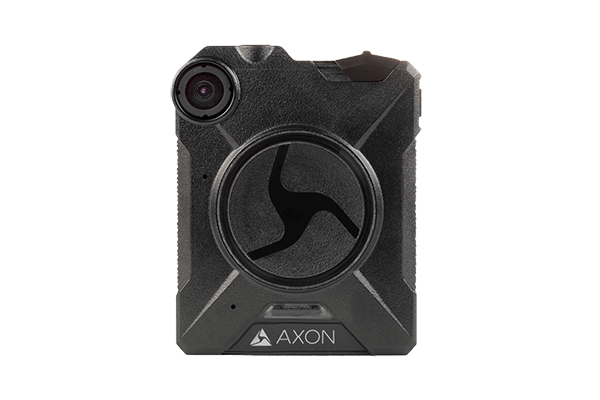 The most commonly used body camera used by many police forces is the Axon
Body 2. For those who are more interested in seeing what type of footage is recorded and what types of
stories that body cameras in general tell, I suggest you look to the Live PD: Body Cam television show
on A&E for more. For those without the access to television,
I suggest that you follow this link (https://www.youtube.com/channel/UCXMYxKMh3prxnM_4kYZuB3g)
for YouTube videos on the subject but I also urge you to use caution as some of the footage is graphic.
Many police body camera videos are released to the public in an attempt to show the types of things
that are captured.
Body cameras are used by police to make sure that conduct on both sides of a conflict is being dealt
with in the appropriate way. Although the police having body cameras on may change the behavior of
both the police as well as those who they request to talk to, the only time the videos surface is if there
is some crime or some instance that could be learned from. The cameras are always on but require
activation in order to keep the captured images to be used for later. The videos captured by police
body camera are kept as evidence within the station and are held to the same standards as any other
piece of evidence in order to prevent tampering or the release of information.
POST EDIT
The thing that takes police body cameras to the next level is the possible inclusion of facial recognition technology. There is new technology that is being pursued that start will start the recording from the body camera after receiving a trigger from the sounds of something like a siren or gunshot as well as something like an accelerometer signal that is from something like speeding up in a car or running. On top of this, facial recognition technology can be used in order to scan people and alert the police to somebody with a warrant out for their arrest. This facial recognition could also identify missing persons as well. The issue with this technology is the fact that they will have to be running the software at all times which means that the police would know who everybody around them is. They could either have a downloaded database inside the camera but more likely have them connected to the police database through the web. Police can search somebody just with their real name in order to find out whether or not they have a warrant. With facial recognition technology, the police would be able to identify everybody instead of needed to detain them beforehand. This brings up the fourth-amendment question of unreasonable search because this technology can possibly be implemented at the federal and state level. The technology would be scanning everybody's faces in order to tell who has a warrant or who has been reported missing which means that unreasonable search could be argued. Kairos, a developer of facial recognition technology, declined to enter into a partnership with Axon body cameras because their technology was not reliable enough in order to use it with body cameras. Although the technology is not ready yet, it is highly likely that it will not be long before it is ready for body camera use.
https://www.youtube.com/channel/UCXMYxKMh3prxnM_4kYZuB3g
https://www.biometricupdate.com/201810/using-facial-recognition-to-activate-police-body-cameras-sparks-concern

Loved this post. I was not aware that the police were required to activate their cameras. So in a sense if you have a crooked police officer what is preventing them from not activating their camera? In the statement you wrote, "The cameras are always on but require activation in order to keep the captured images to be used for later." Do you know how long the videos are kept for? In what instances would they be required to be activated and when would they be allowed to remain inactivated?
ReplyDeleteThe cameras are activated basically whenever the officer approaches somebody whether it be a traffic stop or seeing somebody on the street. Nobody knows how any encounter might go so it is better to be safe than sorry when it comes to recording things. Things can escalate extremely fast and there is a high likelihood that the cop will not be able to start the recording after things have started to go bad. To answer the question of how long the videos are kept for, it isn't a clear answer. States as well as police determine the policy for how long videos are kept which means that it is highly dependent on where the videos were taken. (https://www.brennancenter.org/analysis/police-body-camera-policies-retention-and-release)
DeleteI would also like to know more about how long this video information is stored. Also, in your opinion are the body cams fulfilling the purpose that they were created to serve? How can we improve on what they are already doing? Would it be a good idea to make these cameras be on at all times?
ReplyDeleteIn my opinion, I have always thought that more accountability is always a good thing and these cameras seem to be a catalyst for this. What sort of regulations are on this technology? And who has access to the footage inside the police department?
The data is stored according to the state law and police department regulations. The videos are kept as evidence the same as any other evidence. Personally, I think more accountability is better. In this day and age when there is a huge debate over police brutality, I believe that video evidence is a great way to clear up the stories on both sides.
DeleteScott,
ReplyDeleteNice writing! Very engaging. I was surprised to see that cameras typically increase arrests. It almost seems that when police lose their privacy they feel the need to conform to work standards. Perhaps survivors review their video, and they don't want to be seen as "the nice cop". This seems to dehumanize their jobs in some ways too. Instead of being at their discretion, police feel the need to act as if their supervisor was always watching (again we come to conformity as a side effect of decreased privacy!).
And yet, I feel the body cams are a decent method helping paint a clear picture of what happened at any crime scene. As said above, it helps catch crooked cops, and justifies their behavior when in serious danger in facing false accusations.
Personally, I am curious if the stations hurt for jobs where officers are forced to wear body cams? Does the invasion of the officers privacy affect who wants to be a cop? If so, what does that say about our police force??
I think that we should not even want police who would not become officers because they were held to their actions. They are supposed to help our justice system work and if they are scared to show how they do so, they aren't worth the metal on their badge. Yes it comes tied in with less privacy, but it seems to be offset with how much it will help out.
DeleteI'm honestly quite surprised to hear about how arrests go up when police body cameras are on officers, but then again, I question if there were any sort of bias or anything in those statistics or how many groups they tested.
ReplyDeleteAnyway, I totally think that body cameras are the way of the future, especially in the wake of many police-related investigations of the police abusing their powers. Maybe not so much here in Salt Lake City, but I know growing up back in Chicago, it seemed that everyday on the news there was some incident where a cop either shot at an unarmed suspect or had some other sort of abuse of power. Especially because most of these seemed to be race related, or at least spun that way by the media, I think the public is going to support the use of police body cams to keep police in check (even though it seems like the addition of a body cam does nothing, according to the post).
Perhaps my biggest concern is that these cameras seem not to be on at all times. I know that police usually have dash cams that are always on and recording, but it doesn't make sense to me why it is not that way for body cams. The fact that the police have to activate the camera themselves for it to start recording seems kind of counter productive if we want to make sure the cops don't abuse their powers, because it would seem easy for them to just not turn their body cams on. Obviously if there they were allowed to be on at all times there would need to be some sort of regulation with the body cam, but I still don't see the reason for it not to be on at all times.
I found this on the usage of body cameras in Utah: "Utah (HB 300) (2016) requires law enforcement agencies that use body cameras to have a written policy governing their use. Policies at a minimum are required to address the security, storage, and maintenance of data collected from cameras. Officers are required to ensure the proper functioning of their equipment, to wear the camera so that it is clearly visible, to activate the camera prior to an encounter and to document when a body camera was used in an encounter. Officers can deactivate a camera when consulting with a fellow officer, during periods of inactivity, when conversing with a victim, witness or informant, or if an individual requests that the officer stops recording. Officers must document the reason for deactivating a camera."
ReplyDelete- http://www.ncsl.org/research/civil-and-criminal-justice/body-worn-cameras-interactive-graphic.aspx#/
Additionally, this site suggests that SLC PD, West Valley City PD, and Logan PD use body cameras - https://www.rcfp.org/resources/bodycams/
I know everyone is concerned with the issue that the camera can be manually turned off, and I am too. But, there's obviously some privacy concerns with always on cameras to both law enforcement, the general public, victims, informants, and witnesses. I think a law like Utah's that requires substantiated reason to turn it off, and that it should be turned on in every encounter is a good step towards policing the police, but it can still be abused if an officer claims it "malfunctioned" or the battery just so happened to die.
I think that an officer has a lot to lose by claiming that their camera malfunctioned or happened to die. They are still responsible for making sure everything is running properly so there should still be some hesitation before they do this sort of thing.
DeleteLike Sophia, I'm interested in the implications behind the police officers activating the cameras themselves. Isn't there a possibility that they could not record incriminating behavior on their part? Although, I guess if they didn't record something pertaining to a case that goes big, that fact in and of itself could be considered incriminating, so maybe that's a check against that sort of behavior.
ReplyDeleteIt's very interesting to me that the videos from these body cams seem to become available to the public. I myself have watched some body cam footage, both graphic and not, and I understand why the former would be an issue of public concern, but the other body cam footage I watched was an officer investigating a disappearance that turned out to be a triple homicide. He even recorded the inside of the neighbor's house that he was invited into, and I can't help but think about how I would not want people to see A: the layout of my home, and B: the valuable things I have IN my home.
Here's the vid if anyone's interested: https://www.youtube.com/watch?v=2ZJzEZ8Y-rM&t=3s
I imagine that people who are drunk, on drugs, and or have mental problems would react violently knowing that they are on camera. I feel like this would decrease safety for police officers which is the opposite of one of the intended purpose of body cameras. I wonder if there are statistics to help support this hypothesis? I also wonder how safe body cameras actually are? I wonder how often they malfunction and if damaged equipment causes electric shocks? I wonder how expensive body cameras are? I also wonder if officers know that before activating only 30 secs of the footage is saved? I ask this because like my fellow classmates we wonder about police avoiding recording incriminating behavior.
ReplyDeleteThe cameras are not cheap and storing the data is also pretty expensive. The cameras are made to be decently hard to spot and weather proof in order to try and combat some of these issues.
DeleteI support body cameras on on-duty police in general. I argue that these cameras should be on whenever the police are active. Law enforcement who are on-duty have different privacy rights than others. People in other professions should have a greater degree of privacy when they are working because law enforcement should be under greater scrutiny owing to the nature of their job. One of the issues raised in the post is that the body camera is activated at the officer's discretion. This means that a corrupt officer could hide their wrongdoings by simply not enabling their camera, which I think should change. If the camera was constantly on, it would be harder to remove evidence of wrongdoings.
ReplyDeleteAlthough this would be great in a perfect world scenario, it is far from feasible with current technology. Storing all of that footage means a huge amount of expenses. Although there is the issue that people can try to cheat the system, it at least makes it harder to do so and is almost strictly better than not having video evidence at all in my eyes.
Delete