Congress mandated that the FAA pass regulations
integrating the use of drones into the U.S. navigable airspace. The FAA did so, but declined to address the issue
of privacy when operating drones.
Various states, including Utah, have enacted laws regulating the use of
drones by state and local law enforcement.
Monday, February 25, 2019
QUESTION OF THE WEEK NO. 6

Thursday, February 21, 2019
Weekly Takeaways - Not Your Average Cookie
This week's discussion centered around the storage, utilization and commercialization of internet data. Pinnacle to understanding the billion dollar industry around data brokerage and web advertising are the techniques utilized to track users in their web activities. In class we discussed three main methods of data harvesting.
- Cookies: Small bits of HTML script which are stored by a user's browser. Cookies serve as a memory methods, so websites may better serve the user. For example, when a website is first accessed, cookies are stored which detail this user has logged on before or entered password information. The next time they visit the website, the do not have to log on or go through introductory user interface guidelines. Two types of cookies exist: first and third party cookies. First party cookies, are cookies harvested by a browser to improve the user experience or as a feedback mechanism. Third-party cookies are bits of information collected by an auxiliary source which often sell information to advertisers. Cookies can be good and bad. The class was split about if they would remove cookies from their browsers to increase privacy.
- Web Beacons: A plug-in, which can be as small as one pixel. Web beacons monitor how the user is interacting with a web-page. Information harvested from beacons is often sold to advertisers as well. Interestingly, there is a plug-in for Mozilla Firefox called LightBeam which illuminates any web beacons being employed on the website you are on.
- Canvas Fingerprints: Perhaps the least well know tracking device, canvas fingerprinting involves instructing the browser to create a picture of the device. A "self-portrait" which details the screen of the user and sends that information to data collection and processing plant. From there, it can be mined and information sold.
The most controversial part of the week came in discussion surrounding a privacy hypothetical: Would you pay $25/month to remove all ads and web tracking?
The class responded with 7 no's and 2 yes's.
Those who responded no to the hypothetical presented the argument that it was logistically impossible sustain the billion dollar industry of internet advertisement with $25. Additionally, how would the money be split up? Some expressed how they enjoyed having targeted ads and they were willing to compromise privacy to get good suggestions about what to buy. Finally, they pushed that tracking is inevitable and unavoidable. Thus, it wouldn't matter if ads and tracking were blocked as google would find a new way to track what you were up to.
The reasons driving the yes response were less homogenous. One argued, they wanted to increase the amount of security on the electronic devices and were willing to spend $25 to prevent any hackers from accessing their information. The other, argued that their time was worth spending money to block advertisements. In addition, they worried about the effects of targeted advertisements on free will and creativity.
The conversation boiled down to question the ethics of an internet and if it should cost money to use certain tools to guarantee privacy maintenance. While this topic is somewhat separate, it was agreed that it should be considered and is playing larger role in the electronic space today. Overall, another great week filled with "sweet" bits of knowledge!
Policy Body Cameras
The argument for why police should use body cameras is that the police should have nothing to hide in
their conduct and it could only further help clear up the issues of police misconduct while promoting trust
in the judicial system. Some people think that police would be more reserved and more hesitant to make
arrests with body cameras because they might be afraid that they could be caught for misconduct,
but this is actually the opposite. “In fact, this study showed that those officers made more arrests and
issued more citations than the control group without cameras.”
People saw these results and said that there must have been biased in testing because they expected that
police with body cameras would make less arrests and issue less citations. This, once again, contradicts
popular belief in this regard in the sense that the study had no statistical difference in sex, race, age, and
other places such as years in the force. Although people want to believe that officers act difference due
to them wearing cameras, but if anything they push their jobs even harder.
There is one big issue of privacy that is brought up when talking about police having body cameras
which is who gets captured. A common misconception is the thought that police have their body
cameras are recording at all times but this is far from the case. The policeman
(or any member of the force) who has a body camera activates the camera at their discretion.
The camera is always on but only stores the last 30 seconds of footage before the person activates it.
This extra capture time is to ensure that the entire story is being told instead of one that could be
framed. There was an instance where a Baltimore policeman by the name of Richard Pinheiro who
planted drugs and accusing someone of having them. It came up in court that the evidence was clearly
planted by the officer which caused the charges to be dropped. Body cameras are there to be an
unbiased source of evidence that is not affected by personal testimony. They are encouraged to activate
their body camera whenever they approach a suspect of anything in case things take a turn for the
worse. The cameras have wide lenses and microphones in order to capture as much of the scene as
possible. The camera evidence collected by the body cams has to be admitted as evidence the same as
any other video evidence and is considered the same.
Camera footage that is captured by police body cam can be used to clarify the sequence of events in
court and be used to evaluate how a member of the force handled the situation. This can be used as
either defensive evidence on charges about police brutality or to evaluate whether or not the police
used excessive force.
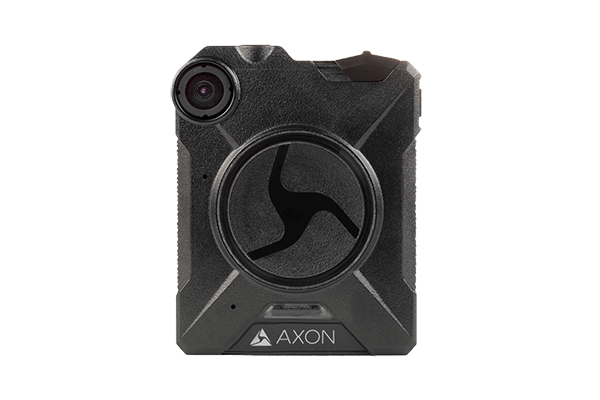 The most commonly used body camera used by many police forces is the Axon
Body 2. For those who are more interested in seeing what type of footage is recorded and what types of
stories that body cameras in general tell, I suggest you look to the Live PD: Body Cam television show
on A&E for more. For those without the access to television,
I suggest that you follow this link (https://www.youtube.com/channel/UCXMYxKMh3prxnM_4kYZuB3g)
for YouTube videos on the subject but I also urge you to use caution as some of the footage is graphic.
Many police body camera videos are released to the public in an attempt to show the types of things
that are captured.
Body cameras are used by police to make sure that conduct on both sides of a conflict is being dealt
with in the appropriate way. Although the police having body cameras on may change the behavior of
both the police as well as those who they request to talk to, the only time the videos surface is if there
is some crime or some instance that could be learned from. The cameras are always on but require
activation in order to keep the captured images to be used for later. The videos captured by police
body camera are kept as evidence within the station and are held to the same standards as any other
piece of evidence in order to prevent tampering or the release of information.
POST EDIT
The thing that takes police body cameras to the next level is the possible inclusion of facial recognition technology. There is new technology that is being pursued that start will start the recording from the body camera after receiving a trigger from the sounds of something like a siren or gunshot as well as something like an accelerometer signal that is from something like speeding up in a car or running. On top of this, facial recognition technology can be used in order to scan people and alert the police to somebody with a warrant out for their arrest. This facial recognition could also identify missing persons as well. The issue with this technology is the fact that they will have to be running the software at all times which means that the police would know who everybody around them is. They could either have a downloaded database inside the camera but more likely have them connected to the police database through the web. Police can search somebody just with their real name in order to find out whether or not they have a warrant. With facial recognition technology, the police would be able to identify everybody instead of needed to detain them beforehand. This brings up the fourth-amendment question of unreasonable search because this technology can possibly be implemented at the federal and state level. The technology would be scanning everybody's faces in order to tell who has a warrant or who has been reported missing which means that unreasonable search could be argued. Kairos, a developer of facial recognition technology, declined to enter into a partnership with Axon body cameras because their technology was not reliable enough in order to use it with body cameras. Although the technology is not ready yet, it is highly likely that it will not be long before it is ready for body camera use.
https://www.youtube.com/channel/UCXMYxKMh3prxnM_4kYZuB3g
https://www.biometricupdate.com/201810/using-facial-recognition-to-activate-police-body-cameras-sparks-concern
Monday, February 18, 2019
QUESTION OF THE WEEK NO.. 5
Would you be willing to pay a monthly fee of $25
to access and use the worldwide web if search engines, social networks and
websites were ad free and did not collect information about you or track your
web activity?
Sunday, February 17, 2019
ALPR Class Exercise
This week the class broke into two groups to complete an in-class exercise to identify a list of privacy and data collection issues that should be addressed by the University in any policy governing use of its automated license plate reader system. A summary of the issues is set out below.
THE EXERCISE
The University of Utah has an automated license plate reader system it uses for parking management. ALPR readers replaced officers who previously monitored parking lots checking vehicle hang tags. You have been asked to develop a policy regarding use of the systyem. What privacy and data collection issues should be addressed in teh policy? Prepare a bullet-point list of issues.
Group One:
- - No storing of any information collected unless a ticket is issued
- - A person has to verify that the license plate matches the license plate that ALPR has identified before issuing a ticket
- - The database of parking pass holders will be updated with new passes as they are purchased and old passes will be purged each semester
- - The ALPR system will be off unless the driver is in a designated parking area performing their duties
- - Verify that the algorithm/system functions at a threshold of at least 90% accuracy
- - Provide opportunities for informed consent - stating that if you purchase a pass or park in a location (such as the visitor and pay parking) you are consenting to your license plate to be viewed by this system for the purpose of parking management
- - Have the times when ALPR is in use clearly posted on campus
- - Restrict access to the data collected to only those who need the information to perform their jobs (e.g. Commuter Services)
- - Service and update the technology regularly (by semester)
- - The data collected cannot be disclosed to third parties unless a crime has been committed
- We also discussed secure storage of the data while it is in use, but could not come to a consensus.
Group Two:
- No Storage of license plate scans – unless you are giving a ticket
- This info should not be shared with government
- Don’t connect it to the DMV database
- They should not store the constant stream of videos
- Create a well defined privacy policy
- Automatic ticket print when the system registers to backcheck the people giving tickets
- When someone goes to pay their ticket, afterward their picture and location data is erased
- What is in the profile for your parking account? – uID, license plate
- How can we address visitor parking
- The only time you can go through dmv or government is if you need to give tickets to visitors
Friday, February 15, 2019
Takeaways for Week 6
This week we discussed privacy concerns surrounding technology that can be used to track people. Here are some takeaways:
- Big Brother surveillance can be used to track people’s locations and discover personal information about people based on where they go.
- People can be tracked in various ways including: ankle bracelets, tracking of cars, tracking via phone, Stingrays, Pineapples, ALPRs, voice recognition, facial recognition, transactions using a credit card, and infrared/thermal imaging.
- Stingrays and Pineapples in particular pose a serious threat to privacy, because they are relatively easy for individuals to obtain, not just government agencies.
- Federal regulation of automatic license plate readers (ALPRs) would be tricky. Since cars move over state borders, a federal law for them would make sense, for consistency. However, such a law could be against what specific states want.
Feel free to add some more takeaways in the comments!
Thursday, February 14, 2019
Regulating Data Brokers
Knowledge is power, but in the age of mass
advertising, knowledge is money too.
Anyone who has received a targeted ad knows that corporations have plenty
of ways to learn about you. But the company
flooding your email with eerily relevant spam rarely does its own
research. Between the cost of servers to
store data, the networks to gather data, and the complex algorithms required to
process and analyze data, data collection is expensive and difficult. For companies, it is far cheaper to purchase
data and data analysis from a data broker.
Data collection may be expensive to get into, but it is a $200 billion
industry: brands will pay data brokers an average of $89 per email address1.
 One
of the spookiest things about data brokers is how well they stay out of the
public eye, as is their desire. These
companies are so obscure that many people have never heard of them, despite their
multibillion-dollar size. Some of the
largest are Acxiom, Nielsen, , Equifax, CampaignGrid, and CoreLogic,
each with their own specific area of expertise.
Acxiom claims to have data on "all but a small percentage" of
US households and its data is used in 12% of America's direct marketing sales2. CoreLogic tailors its analysis specifically
for use in the real estate industry and has data on 795 million property
transactions and 93 million mortgage applications3. CampaignGrid has political data on roughly
80% of registered American voters4.
To avoid legal issues surrounding privacy protection
it is common for data brokers to anonymize their data. Consumers are not directly identifiable from
the data, but that turns out to be a very small hinderance. This is due to data cookies, small pieces of
data from a website and stored on a user's computer. In most cases, cookies are integral to the workings
of websites and the internet in general.
However, sites can store small identifiers on a computer such as the
likely political affiliation of the user5 or if the user is a
homeowner. As long as none of these
identifiers uniquely link to a specific person, the broker is within the bounds
of anonymizing data. And it's not reassuring
that LiveRamp's own website offers to "tie all of your marketing data back
to real people"6. LiveRamp is another data broker, formerly
called Acxiom Corporation before changing names when the current Acxiom
splintered off in 2018, and specializes in digitizing and analyzing physical
consumer data. Why Acxiom Corporation split
is not clear from my research, but it may have something to do with the
conflict of interest created by the anonymizing and anti-anonymizing companies
being the same company.
Legislation regulating data brokers has been slow
coming. There is no federal regulation on data brokers and in most states data brokers are mostly or entirely self-regulated. The term "data broker"
was not even defined in legislation until 20188. Probably the most noteworthy regulation on
data brokers in the US is the California Consumer Privacy Act (CCPA) signed
into law on June 28, 2018. The law is
based on the General Data Protection Regulation (GDPR) followed in the EU, and
is considered to be a consumer-friendly legislation. The main points of the act are that it allows
consumers access to the information collected on them by brokers, knowledge
about what data is being collected, whether this data is being sold and to whom,
the ability to prevent the sale of information, and the protection that if consumers
exercise their privacy rights companies cannot change their prices or services
as retaliation9.
The Data Broker Accountability and Transparency Act is
federal bill which has been proposed for several years, but never passed as
law. It would prohibit data brokers from
disclosing false data on a person and would allow consumers to dispute the
accuracy of their personal information and ask for corrections. It would also force data brokers to provide
individuals with reasonable means of excluding themselves from having data used,
shared, or sold10. Though
this certainly falls upon an important issue, I would argue that the main issues
surrounding data brokers is not that the data collected on consumers is
inaccurate. In fact, I surmise that data
brokers have refined their algorithms until the conclusions they draw on a person
are mostly accurate. I think the
proposed bill should focus less on allowing consumers to dispute the accuracy
of conclusions and focus more on requiring more express forms of consent in
relation to data collection.
1https://www.webfx.com/blog/general/what-are-data-brokers-and-what-is-your-data-worth-infographic/
2https://www.forbes.com/sites/bernardmarr/2017/09/07/where-can-you-buy-big-data-here-are-the-biggest-consumer-data-brokers/#50ca44526c27
3https://www.ftc.gov/system/files/documents/reports/data-brokers-call-transparency-accountability-report-federal-trade-commission-may-2014/140527databrokerreport.pdf
4https://www.propublica.org/article/how-companies-have-assembled-political-profiles-for-millions-of-internet-us%20
5https://www.documentcloud.org/documents/472632-political-targeting-companies
6https://liveramp.com/
7https://www.lexology.com/library/detail.aspx?g=b393169c-2a12-41d7-a630-b3063187b12a
8https://leginfo.legislature.ca.gov/faces/billTextClient.xhtml?bill_id=201720180AB375
9https://www.congress.gov/bill/115th-congress/senate-bill/1815
Monday, February 11, 2019
QUESTION OF THE WEEK NO. 4
There is a growing privacy concern with the
proliferation of automatic license plate readers primarily centering around the
creation of massive databases that potentially could be used for surveillance
purposes. ALPR devices are being used by
both government and private businesses and several states, including Utah, have
enacted laws regulating their use.
Sunday, February 10, 2019
Class Exercise of Use of Facial Recognition
After discussing the topic of facial recognition, the class was split into two groups and asked to respond to two separate case scenarios involving the commercial use of facial recognition technology (FRT). The case scenarios and the group responses to the questions posed are set out below:
Case Scenario One:
The NFL requires that the stadium owner who will host next
year’s Super Bowl must (1) install video cameras at every stadium entrance (2)
deploy drones to hover over the stadium videotaping attendees and (3) equip all
cameras with real-time facial recognition software.
You are an outside consultant and are asked to advise the
stadium owner with respect to three questions about the NFL’s requirements (1)
should you employ the facial recognition technology without giving notice to
attendees? (2) should you require consent to use the technology from all
persons attending the game and, if so, how do you obtain that consent? and (3)
what policies should you implement governing the use of the technology and the
info collected?
Case Scenario Two
A beverage company that
manufactures energy drinks, weight-loss drinks and flavored alcoholic drinks
operates digital kiosks in supermarkets.
The kiosks use video cameras equipped with FRT to assess the age,
gender, body type, race and ethnicity of the consumer standing in front of
them. The technology is also connected
to the supermarket’s frequent shopper program, which requires submission of a
photo. The technology automatically
searches the social networks of any individual it identifies to ascertain
interests and likes. The kiosk can
display a targeted advertisement to the consumer based on their demographic
characteristics, their purchase history and other info obtained through SM
search and can print out a discount coupon that may be redeemed for an
immediate purchase.
You are an outside consultant hired
by the CEO to assist the supermarket in developing a policy governing the
kiosks and use of the technology. What
questions do you want answered by the beverage company and what issues should
be addressed in the policy?
Group One's Response
Case Scenario 1:
1 Q. 1: Employment of FRT requires notice to all
attendees
2 Q. 2: Yes, informed consent should be required to all
attendees.
a.
Consent should also be given when buying ticket
but not at entrance
i. It
is specifically written on ticket (for 3rd parties)
ii. If
in person: Separate consent on paper//at box office
iii. Web:
1.
Be notified when adding to shopping cart
2.
Highlight the fact you are giving informed
consent when you purchase the ticket (digital signature)
3 Q. 3: Policies:
a.
Only stored for the length of the game
b.
Only used for security
c.
Database: Third Party (law enforcement based
&& Amazon)
Case Scenario 2:
Questions:
a.
When the photo is taken, are all of the
different uses for the biometric disclosed to the customer.
b.
Background on the training dataset for algorithm
should be disclosed (metrics on false positives etc)
c.
How long does it take?
d.
How many metrics can be removed (age, gender,
body type etc.) without compromising accuracy of the algorithm?
e.
How long is data stored?
f.
How is access to social networks happen?
2 Issues to be Addressed:
a.
Can you submit to certain things but not other
(ads but not coupons etc)
b.
Feedback system should be present?
c.
What if the person is buying something for
another person? How will the differentiation happen?
d.
Minors with alcohol?
Group Two's Response
Case Scenario No. 1
Stadium owners are required to install video cameras at
every stadium entrance, deploy drones to videotape attendees, use FRT.
We are outside consultants asked to advise the owner.
1 Q. 1: Should you employ the FRT without giving notice
to attendees?
a.
Attach a consent disclaimer when you buy the
ticket and on the ticket, also signage through security when you enter the
building. You have to physically or digitally sign your ticket or you won’t be
allowed entry.
2 Q. 2: Should you require consent to use the tech from
all persons attending the game and if so how do you obtain that consent.
a.
Signage outside the stadium is implied consent.
3 Q. 3: What policies should you implement governing the
use of the technology and the info collected?
a.
Keep faceprints for 72 hours, then delete them.
Keep the video surveillance footage encrypted, offline. We aren’t selling it to
anyone.
Case Scenario No. 2
Why are you using FRT to find age?
Can you require a second form of age identification when
selling alcohol? Scan your ID?
How long are you storing that data?
Secondary authentication?
Will the data be sold? How long is it stored for?
We have concerns about how this will be used with
advertisements
Friday, February 8, 2019
DRAGNET STINGRAY FISHING (Guest post from former student)
They say you can tell a lot about a woman by what’s in her purse. More generally, you can tell a lot about any person by what they always carry. In my case, I never leave the house without my keys, my wallet, and my cellphone. The keys are pretty self-explanatory – I’ve never left home without planning to get back in later – and my wallet is there so I can buy lunch. My phone, though, seems to just tag along to cause stress. Powered on, but idle, I wonder why it uses so much more battery than, say, a tablet. A partial answer to that question is that, several times per minute, my phone sends a small message to the cell tower1. Much as I would love better battery life, this makes sense. Without that “ping” to the cell tower, my phone would have no way to know of, for example, incoming text messages.
Unfortunately, the procedure a cellphone uses to connect to the tower is completely unauthenticated, meaning so-named Man-in-the-Middle (MITM)2 attacks are relatively easy to carry out. The basic idea of a MITM attack is very simple: Say I tell you I am someone I am not. For example, a police officer. You would probably want to see some identification for me to prove it. Many software systems do not ask for this identification, meaning they will just send data to anyone who asks for it.

Not this kind of Stingray…
(Source: http://eskipaper.com/stingray-4.html)
This is bad for two reasons: First, whoever owns the Stingray can record calls, (SMS/MMS) messages, and any unencrypted data. Secondly, your phone can be requested to send triangulation data about other cell towers in range, making it possible to track location with very good accuracy in real-time3.
Neither of these things sound great for privacy but, as we’ve already talked about in class, we aren’t too uncomfortable when such aggressive tracking is used in a criminal case.
Of course, this is where everything starts to get messy.
The first problem is that these Stingrays are often used without a warrant1, despite having precedent from other cases that real-time tracking amounts to a fourth-amendment search, and thus requires a warrant4. Added to this is that in cases where Stingrays are used, law enforcement often tries to conceal that fact, even going so far as to drop cases when they would potentially be forced to reveal the use of a Stingray.
The second privacy problem is that everybody’s cellphone within the Stingray’s range of operation is intercepted. This is by necessity – the way a Stingray works means it’s not possible to target an individual phone – but that doesn’t make it any less of an invasion of privacy. When court orders do authorize the use of Stingrays, there is often very little mention of what happens to the “collateral” data collected5. It may be immediately deleted, but it could also all be shoveled into some database. Given the secrecy surrounding law enforcement’s use of such devices, we have no real reason to choose one over the other. However, as the NSA was willing to collect massive amounts of data about American’s phone calls under the Patriot Act, it wouldn’t be unreasonable to believe that they collect and store information gathered by stingrays from unknowning citizens.
However, the worst news is yet to come. Although it would be, at best, questionably legal to own such a device, they are relatively easy to build and are available for purchase outside of the US6. This means that, quite aside from law-enforcement, it isn’t beyond belief that other individuals or organizations have the capability to perform mass surveillance by use of cell site simulators.
Given that, what can you do to protect yourself? Unfortunately, very little. The obvious answer is to switch your phone off and remove the battery. This is foolproof but impractical. Alternately, you could write to your cellphone provider and complain that they need to upgrade their security. This is not likely to be effective because it would cost the company money and because they would most likely have to retain the older, insecure system for backwards-compatibility.
Given the vast amounts of data it is possible to obtain using a Stingray, including live location information and calls, messages, and data, I think it is clear that law enforcement should require a warrant before using a Stingray, keeping in mind a plan for what to do with “collateral” data. However, this does not address the privacy concern that anyone can build a cell-site-simulator for $5007. Though a warrant should definitely be required to use this technology, the real problem is that cellular authentication and encryption are both totally broken and ought to be upgraded.
1https://www.eff.org/deeplinks/2012/10/stingrays-biggest-unknown-technological-threat-cell-phone-privacy
2Personal knowledge supported by https://en.wikipedia.org/wiki/IMSI-catcher
3https://www.eff.org/sls/tech/cell-site-simulators/faq#faq-What-data-can-a-cell-site-simulator-collect?-
4https://www.eff.org/deeplinks/2016/04/eff-and-aclu-expose-governments-secret-stingray-use-wisconsin-case
5https://www.eff.org/sls/tech/cell-site-simulators/faq#faq-If-I%E2%80%99m-not-a-target-of-a-criminal-investigation,-why-do-I-have-to-worry-about-cell-site-simulators?
6https://www.eff.org/sls/tech/cell-site-simulators/faq#faq-Who-else-uses-cell-site-simulators?
7https://hackaday.com/2016/04/08/build-your-own-gsm-base-station-for-fun-and-profit/
Monday, February 4, 2019
QUESTION OF THE WEEK NO. 3
The commercial use of facial recognition technology
for security, access, marketing and customer service is rapidly growing. Privacy advocates argue that widespread use
of the technology will allow businesses to identify and track almost anyone in
public without their consent or even knowledge.
Businesses argue that individuals should not expect complete privacy in
public and that some loss of privacy is outweighed by the benefits the
technology offers consumers and businesses.
Multiple privacy, government and industry organizations have listed “best
practices” regarding the commercial use of biometric technology, but the
recommendations are merely advisory and often conflict with each other.
Should businesses be required to obtain a person’s express
consent before using facial recognition technology?
Friday, February 1, 2019
Post No.3 Facial Recognition Technology
Common police investigation tools on identifying criminal suspects include one of the following: reviewing photos of several individuals or (most often) police lineups. In 1984, Thomas Haynesworth, a eighteen year old resident of Richmond Virginia was spotted on the street and was identified as a woman's rapist. Shortly after, four women also choose his face out of a police lineup. He was convicted of rape (2 cts.) and burglary (2 cts.) and sentenced to life +50 years. In 2009, DNA tested, linked Leon Davis, who had been convicted of other assaults around the same time in the same area to one of the women who initially picked out Haynesworth as her perpetrator. Haynesworth was proven innocent and fully exonerated after spending years in prison. According to the Innocence Project, eyewitness misidentification has “contributed to approximately 70% of the more than 350 wrongful convictions in the United States overturned by post-conviction DNA evidence.” It becomes disturbingly clear that police lineups still have some kinks to work out.
However it is becoming apparent that the traditional means of identification is slowly being replaced by “virtual line-ups,”
where, an algorithm finds a person's face within a photo and normalizes that face to extract features and compare. According to a recent report by the Georgetown law school’s Center on Privacy and Technology the growing use of facial recognition technology by law enforcement has several concerns revolving around accuracy, privacy, and the lack of transparency and accountability.
Accuracy Concern
The report clearly points out that face recognition is inherently probabilistic because it can’t simply give a “yes” or “no” binary answer. Face recognition can only identify whether the individuals are more or less likely matches (p. 9). Furthermore, if a training set is skewed towards a certain race, the algorithm will be better at identifying individuals of that group compared to members of other races. This affects accuracy simply because there is a bias that is created. Although the algorithm does not see race, sex, orientation, or age, the software is not immune from bias simply because human vision is biased and a human made the software. The report stated, “The most prominent study, co-authored by an FBI expert, found that several leading algorithms performed worse on African Americans, women, and young adults than on Caucasians, men, and older people, respectively” (p. 53).
Privacy + Transparency Concern (Civil Liberties & Civil Rights)
The report also indicates that with face recognition privacy is threatened. Law Enforcement uses face recognition in two ways: for face verification and face identification (p. 10). When diving into face identification there are four common tasks: 1) stop and identify, 2) arrest and identify, 3) investigate and identify, and 4) real time video surveillance. To make the connection of how is invades privacy we turn to the extensive reach of photos that face recognition searches. The report states that the databases includes 411.9 million photos, “Over 185 million of these photos are drawn from 12 states that let the FBI search their driver’s license and other ID photos; another 50 million are from four additional states that let the FBI search both driver’s license photos and mug shots. While the total number of individuals that those photos implicate (are unknown), there are close to 64 million licensed drivers in those 16 states” (p. 17). A top question that should arise is how would the Supreme Court interpret the First and Fourth Amendment in regards to law enforcement face recognition. The First Amendment protects our right to free speech, peaceful assembly, petition the government, and to express ourselves anonymously. If the police use face recognition to continuously identify anyone on the street (minus individualized suspicion) than the most basic of freedoms of expression and association are threaten. The constant monitoring could potentially make individuals uncomfortable and alter their behavior, leading to self-censorship and inhibition. The Fourth Amendment is dutied with preventing generalized, suspicionless searches. Face Recognition combats with this because the Amendment requires that warrants be issued only upon a showing of probable cause. Most face recognition searches are invisible and changes the game because it allows “tracking and identification outside of the Fourth Amendment search or seizure” (p. 34). After all in the Katz v. U.S the amendment protected people not places which is linked to the reasonable expectation of privacy test. Interestingly enough this points to the U.S. v. Jones that stated, “that mere visual observation does not constitute a search.”
Thoughts on Utah Law Enforcement Agencies using facial recognition technology
is best summed up to as long as it is regulated. There are three risk deployments: moderate, high, and very high. In terms of real-time video surveillance it would be best if it is used in serious crimes and public emergencies. Even with that being said because the accuracy of the technology is not 100% they should still continue to look for other possible matches in those dire circumstances. The technology should always be checked and corrected for biases and absolutely shouldn’t be used in everyday routine (ex. Walking on the streets).
Additional For Fun Readings
https://www.eff.org/wp/law-enforcement-use-face-recognition
https://www.thedenverchannel.com/news/national/how-police-are-using-face-recognition-to-catch-criminals-experts-say-thats-bad-for-free-speech
https://www.marketplace.org/2018/02/13/tech/why-algorithms-may-have-trouble-recognizing-your-face
Test Yourself
https://implicit.harvard.edu/implicit/selectatest.html
https://www.youtube.com/watch?v=RWO2UQ4MW7U
Subscribe to:
Posts (Atom)